What is a brand portal? Definition, examples & when you need one
A brand portal is a central online hub where your brand guidelines and assets come together. Learn what it is, who needs one, and how to choose the right type for your team.
Danny Verroen
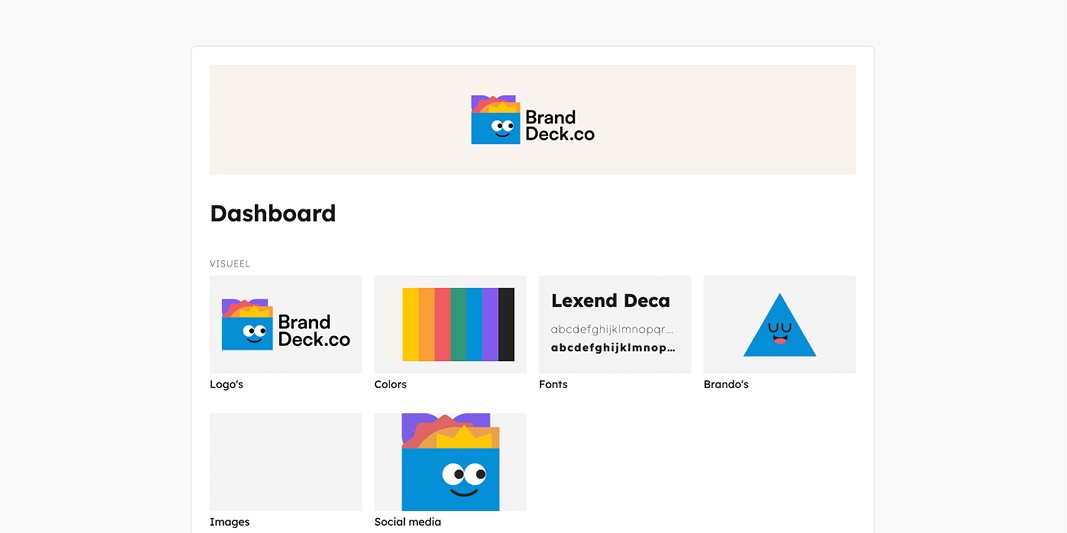
What is a brand portal?
One link. Everything your brand needs. Always up to date.
A brand portal is a central online hub where your brand and assets come together.
Not a PDF. Not a shared folder. Not a WeTransfer link from eight months ago that may or may not still work.
A brand portal is a live environment. One place where anyone who works with your brand, whether that’s your team, a freelancer, an agency or a new employee on their first day, finds everything they need to work with it correctly.
What you actually find in there
A good brand portal contains everything that makes a brand usable in practice. Logo files in every format. Color codes. Typography. Visual examples. Tone of voice guidelines. Templates. The kind of things that currently live across three different folders, two inboxes and one Dropbox that nobody has the login for anymore.
The difference with a traditional brand guide is simple. A brand guide explains your brand. A brand portal lets you use it.
One is a document. The other is a working environment.
Who needs one
If only one person ever works with your brand, you probably don’t need a portal. A well-organised folder gets you far enough.
But the moment more people start working with your brand, things shift. Designers need the right files. Copywriters need to know the tone of voice. Partners need approved assets. And suddenly you’re answering the same questions over and over, resending the same files, and hoping everyone is using the right version of the logo.
A brand portal solves that. Not by adding complexity, but by removing it.
Three types, three different purposes
Not all brand portals are built the same way, and understanding the difference saves you from picking the wrong one.
Brand focused portals like Frontify and Zeroheight are strong on documentation and visual consistency. Great for larger organisations that need to communicate brand rules internally. Less focused on day to day asset usage.
Enterprise brand portals like Bynder and Censhare combine brand guidelines with DAM functionality and governance features. Powerful, but they come with complexity, significant cost and setup times measured in months rather than days.
Lightweight brand portals are built for teams and creatives who want clarity and speed without the enterprise overhead. The focus is on helping people work faster with brands, not on managing compliance.
The right choice depends entirely on your team size, the number of brands you manage, and how much governance you actually need.
The honest question to ask yourself
Before choosing any tool, ask yourself one thing: what problem am I actually solving?
If the answer is “people keep using the wrong logo and I keep resending the same files,” you don’t need an enterprise platform. You need one clear, accessible place where the right stuff lives.
If the answer is “we manage brand compliance across 40 markets with strict approval workflows,” that’s a different conversation entirely.
Most teams fall into the first category. And for them, a lightweight portal that’s easy to set up, easy to share and easy to maintain makes far more sense than a platform built for a global brand team.
The bottom line
A brand portal is not about control. It’s about clarity.
It exists so that anyone who works with your brand can do so correctly, without asking questions, without searching for files, and without accidentally publishing something in Arial.
The best brand portal is the one that fits how you actually work. Not the heaviest one. Not the most expensive one. The one that makes working with your brand easier than it was yesterday.