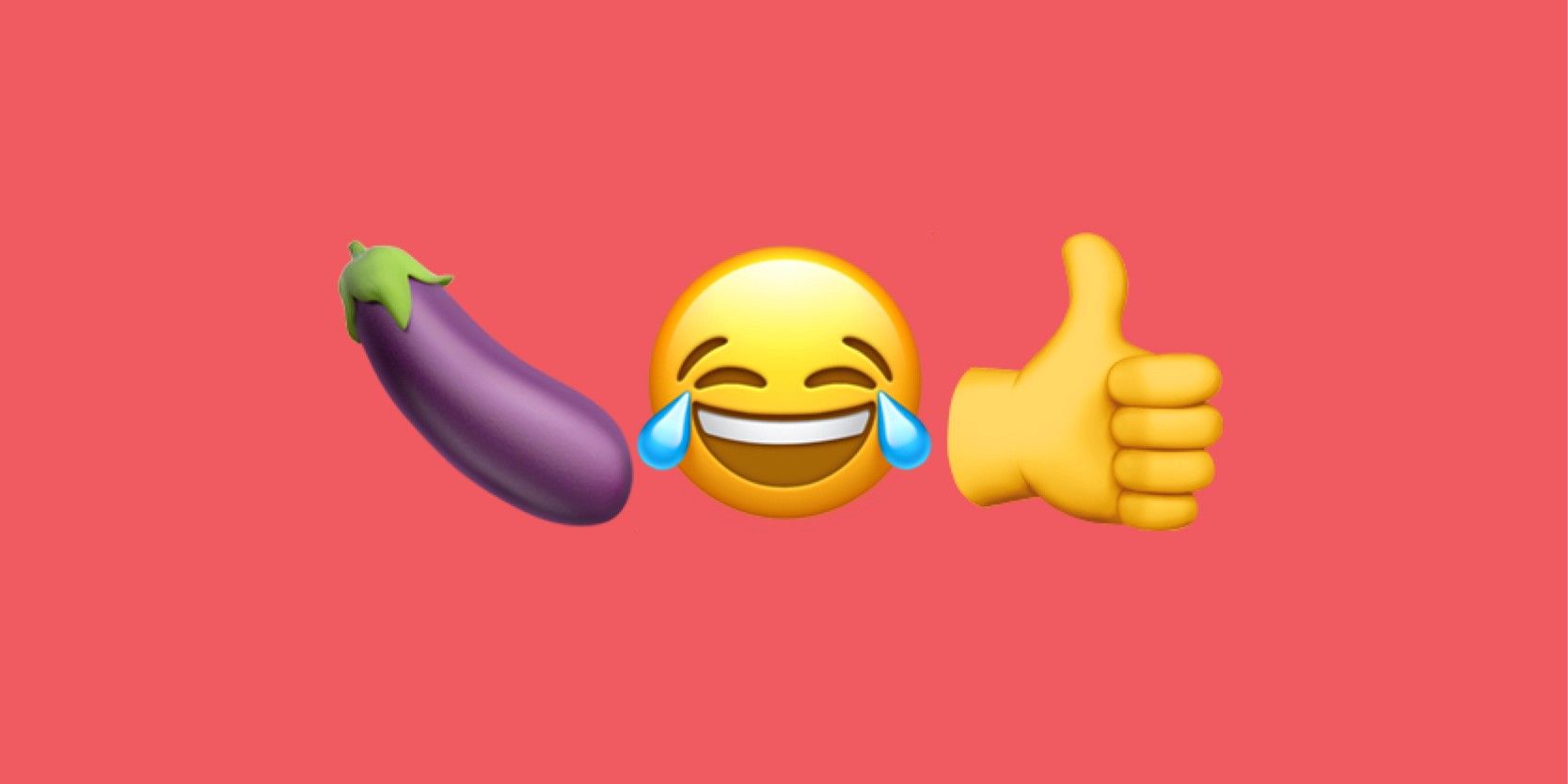
Emoji are a language. And like every language, you can use them wrong. 🔥
What every creative needs to know about the most misunderstood communication tool in your toolkit.
There are roughly 3,600 emoji in the Unicode standard. Most people use about twelve of them regularly. And at least three of those twelve mean something completely different to a 22-year-old than they do to a 45-year-old.
Emoji started as a simple visual shorthand. A smiley face to soften a message. A thumbs up to say yes. A pizza because you wanted pizza.
That was then.
Today emoji are a fully evolved communication layer with their own grammar, generational dialects and cultural subtext. Brands use them in campaigns. Copywriters debate whether to include them in subject lines. And somewhere right now, a senior marketer is sending a 🙂 to a Gen Z colleague who is quietly horrified.
This blog is about understanding that layer, so you can use it intentionally, not accidentally.
A brief and slightly ridiculous history
Emoji were invented in 1999 by Shigetaka Kurita, a Japanese designer working for NTT DoCoMo. The original set had 176 characters, designed to make text messages feel warmer and more expressive. They were pixelated, charming and entirely Japanese in cultural reference.
When Apple added emoji support to iOS in 2011 and Google followed shortly after, the floodgates opened. Suddenly everyone had access to the same visual vocabulary and immediately started using it differently.
What followed was not a standardised communication system. It was linguistic evolution in fast forward. Meanings shifted. New uses emerged. Subcultures adopted specific emoji as symbols. And the gap between what an emoji was designed to mean and what it actually means in practice grew wider every year.
Which brings us to the aubergine. 🍆
When emoji stopped meaning what they look like
Let's get the obvious ones out of the way.
🍆 The aubergine was designed to represent a vegetable. It is no longer primarily used to represent a vegetable. If you are a brand posting a recipe that genuinely involves aubergine and you add this emoji, you will confuse some people and amuse others. Neither is the response you were going for.
🔥 The flame originally meant something is literally on fire or very hot. It evolved to mean something is impressive, exciting or trending. Then it became so overused that it lost most of its impact. Now it mostly means someone wanted to add energy to a sentence and couldn't think of anything more specific.
💀 The skull does not mean death in most contexts under the age of 30. It means something is so funny it killed them. "I'm dead 💀" is a compliment. Using it in a serious context will land very differently depending on who's reading.
🙂 The slight smile looks friendly. It is not friendly. In younger usage, the slight smile has become passive aggressive, a signal of forced politeness that implies the opposite of warmth. Sending 🙂 to a Gen Z colleague after a disagreement is not neutral. It's a statement.
💅 The nail polish no longer means beauty or self-care in most contexts. It means unbothered confidence, sometimes shading into dismissiveness. "Not my problem 💅" is a mood, not a manicure.
💙 The blue heart deserves its own paragraph. Blue hearts are used to signal platonic support, brand affiliation and in some communities, specific in-group identity. Depending on context it can mean friendship, loyalty or something more specific to a particular subculture. If your brand is using hearts and you haven't thought about which colour, you might be saying more than you intended.
The generational gap is real and it matters for brands
Here's the honest situation. Emoji mean different things to different generations and those differences are significant enough to affect how your communication lands.
Millennials tend to use emoji literally or for warmth. A 😂 means something was funny. A ❤️ means affection. Emoji are decoration or punctuation they soften or emphasise what the text already says.
Gen Z uses emoji as a second layer of meaning that sometimes contradicts the text entirely. The 😊 that looks friendly can be deeply sarcastic. The 💀 that looks dark is actually a laugh. Context and irony are baked into usage in ways that don't always translate across generational lines.
Older generations often use emoji sparingly, literally and with occasional bewilderment at why a perfectly good thumbs up seems to have become a passive aggressive gesture among younger colleagues.
For brands, this creates a genuine challenge. Your audience is not one generation. Your tone of voice guidelines probably don't mention emoji at all. And the person writing your social captions may be using a completely different emoji vocabulary than the person reading them.
How brands actually use emoji well
The brands that use emoji effectively tend to do a few things consistently.
They define it in their tone of voice. Not in exhaustive detail, but enough to give guidance. Which emoji fit the brand, which don't, and roughly how many per post is appropriate. This sounds pedantic until you see two posts from the same brand where one uses 🔥🙌✨ and the other uses none, and they feel like completely different companies.
They know their audience's generation. A brand targeting 18 to 25 year olds can use emoji more fluidly and ironically. A brand targeting 40 to 55 year olds should probably stick to clearer, more literal usage. A brand targeting both needs to be careful.
They use them to add something, not fill space. The worst use of emoji is decorative padding. Five emoji at the end of a caption that don't relate to the content don't add warmth they add noise. One well-chosen emoji that reinforces or adds to what the text says is worth ten random ones.
They stay current without chasing trends. Emoji trends move fast. What's fresh today can feel dated in six months. The brands that age well with emoji are the ones who use a consistent, limited set rather than constantly adopting whatever is trending.
The practical bit, how most creatives actually handle emoji
Most designers and copywriters working with client brands handle emoji the same way: copy, search, paste. Open a browser tab, find the right emoji, copy it, paste it into the content, move on.
It works. It's just slow, slightly annoying and easy to accidentally grab the wrong version because yes, 🙂 and 😊 are different and in some contexts meaningfully so.
If you're creating content for multiple client brands, the copy-search-paste workflow also means you're making individual emoji decisions without a consistent reference for what fits each brand. Which is fine until two brands start looking like they have the same voice because they're using the same five emoji.
The better workflow is having emoji accessible alongside the rest of your brand toolkit, so the choices you make are informed by the brand rather than by whatever comes up first in a Google search.
Which is exactly what EmojiDeck is for.
EmojiDeck: emoji the way they should work
EmojiDeck is a nice free tool built specifically for people who use emoji as part of their work. Not a keyboard. Not a search engine. A proper emoji toolkit where you can find, organise and copy emoji quickly without the copy-search-paste loop.
It's built by the same team behind BrandDeck, for the same reason: small things that slow you down every day add up to a lot of time over a year. And emoji, used well, are worth the effort.
Try it at emojideck.com for free.
The one rule worth remembering
Emoji are context-dependent in a way that almost no other communication element is. The same symbol means different things to different people, in different platforms, in different tones, in different generations.
That's not a reason to avoid them. It's a reason to use them intentionally.
Know your audience. Define the emoji that fit your brand voice. Use them to add something rather than to fill space. And if you're ever unsure whether a specific emoji means what you think it means look it up. The aubergine situation could have been avoided many times over with a quick search.